
Hide And Seek 3D: Who is Daddy
ABI Games StudioAction
4.3263.00 Reviews
- Version
- 2.9.1
- Installs
- 10.00M
- Age Rating
- Everyone 10+
Screenshots

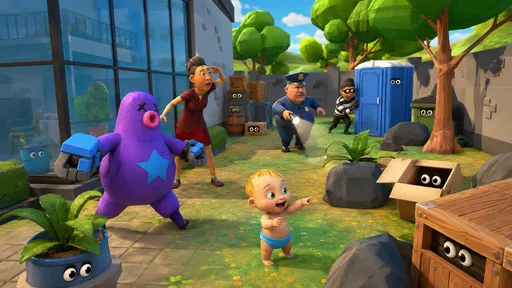




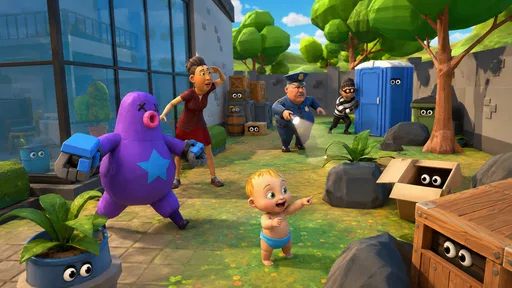

Our Review of Hide And Seek 3D: Who is Daddy
 Analysis by Appyee
I approached Hide And Seek 3D: Who is Daddy expecting a quick, playful action game, and that is exactly where it works best. Its central idea is easy to understand: a father and a newborn baby are involved in a hide-and-seek chase, and every round asks me to think about whether I should search or stay hidden. That simple setup gives the game an immediately readable goal without requiring a long tutorial or a complicated story.
Developed by ABI Games Studio, this free action game is aimed at a broad audience, although its Everyone 10+ rating is a useful reminder that the chase and mischievous hiding theme may suit older children and casual players better than very young users. It has attracted over ten million installs and holds a 4.3 average from around thirty-eight thousand ratings, which fits my impression of a game designed for short, accessible sessions rather than a deep, demanding campaign.
How the early goals turn a simple chase into a playable routine
The first strength is how quickly I understood what I was supposed to do. There is no need to learn a large collection of controls before the basic tension appears. The appeal comes from the relationship between visibility and safety: finding the baby is satisfying when I am in the searching role, while hiding becomes the objective when being discovered would end the round. That direct contrast makes the opening moments approachable.
The baby-and-daddy setup also gives the game a more playful identity than a standard action title. Instead of beginning with weapons, combat statistics, or a large fictional world, it uses a domestic hide-and-seek situation as its source of conflict. I found that tone helpful because it keeps the focus on movement, observation, and timing. The game feels like something I can hand to a friend for a few minutes without first explaining a complicated control scheme.
My practical advice is to treat the first rounds as a lesson in reading spaces rather than rushing. When searching, I look at the environment in a deliberate order instead of moving randomly. When hiding, I pay attention to places that seem visually natural rather than assuming the most obvious corner is automatically safe. This approach makes the opening goals feel more active, even when the underlying objective remains straightforward.
That simplicity is also the first limitation. Players who want a rich narrative, character development, or a large set of distinct objectives may find the initial loop thin. The game’s early appeal depends on the charm of the scenario and the quick satisfaction of a successful search or escape. If that core interaction does not interest you, the accessible opening will not compensate for the lack of a more elaborate premise.
For a normal everyday use case, I can see myself playing it while waiting for an appointment or taking a short break from work. It does not demand the kind of uninterrupted attention I would reserve for a long story-driven game. A parent and child could also take turns deciding whether to search or hide, although the age rating suggests that the best audience is not necessarily toddlers. The short-session format is a genuine advantage when I want something immediate.
What progress feels like during repeated sessions
The game’s progress is communicated less through a complicated management layer and more through the experience of handling the chase more confidently. At first, I rely on trial and error. After a few attempts, I begin to recognize which decisions waste time, when searching becomes too predictable, and why hiding in the first convenient location can be a poor choice. That growing familiarity is the most convincing progress signal available through the core play.
I appreciate this because it puts some responsibility on me rather than turning every improvement into a reward screen. A successful round tells me that I read the situation better than before. The next attempt can then become a small experiment: search from a different direction, delay movement, or choose a less obvious place to hide. Those decisions give the repeated structure a little more texture than simply tapping through identical objectives.
At the same time, players should keep their expectations measured. This is not the kind of action game where I would expect a detailed character build, a long-term equipment plan, or a complex skill tree. The satisfaction comes from improving my judgment inside the hide-and-seek scenario. Anyone specifically looking for extensive unlocks or a highly layered progression system should probably choose a larger action game instead.
The clearest progress signal is therefore personal mastery. I know I am improving when I stop reacting at the last second and start planning around what the other side is likely to do. That change matters because the premise is based on anticipation, not just speed. The game rewards me for noticing patterns in my own behavior: searching the same places, hiding too early, or assuming that a quiet moment means I am safe.
I also found that alternating roles helps prevent the basic idea from becoming completely one-sided. Searching and hiding create different kinds of decisions. Searching encourages coverage and patience, while hiding encourages restraint and awareness. If I only approach the game as a chase, I miss part of its appeal. The two perspectives make the same setting feel slightly different from one attempt to the next.
Challenge and pacing: where the game stays engaging
The difficulty curve works best when I allow the game to create uncertainty instead of trying to force every round into a speed test. The early challenge is mostly about understanding the rules of the situation. Later enjoyment comes from making fewer careless choices. A failed attempt can be useful when it shows me that I searched too narrowly or selected a hiding position that was easy to predict.
That said, the pacing is intentionally light. I would not describe it as a punishing action game built around precision or high-stakes combat. Its challenge comes from the hide-and-seek problem, and that means the experience can feel relaxed for one player and repetitive for another. People who enjoy quick rounds and small tactical decisions will likely appreciate the rhythm. Players who need constant escalation may feel that the game reaches its limits sooner.
One useful way to keep the challenge alive is to set a personal rule before starting. I might decide not to revisit the same hiding approach twice, or I might search systematically rather than immediately checking the most obvious locations. These self-imposed constraints are not a replacement for formal difficulty options, but they make the basic loop more interesting and help me judge whether I am actually learning the space.
The trade-off is clear: the game is less intimidating because it does not overload me, but it also has less room for advanced players to express mastery. A competitive multiplayer game would offer stronger pressure from human opponents, while a traditional stealth game would usually provide more elaborate level design and consequences. This title sits between those experiences, using a friendly hide-and-seek concept for quick action rather than trying to become a full stealth simulation.
For that reason, I would recommend it to someone who enjoys casual action games with a visual, immediately understandable objective. I would be more hesitant to recommend it to a player who wants precise combat, a substantial campaign, or a deep ranking system. The game’s challenge is real enough to support repeated attempts, but it is not the main attraction for people who measure value by complexity.
What encourages another round, and what may create fatigue
The strongest retention pressure comes from the desire to correct a mistake. When I lose because I committed to a poor search route or hid too predictably, starting again feels reasonable because the solution seems close. That “I know what I should try next time” feeling is more effective here than a large reward structure would be. The rounds are easy to understand, so restarting does not feel like a major commitment.
There is also a natural curiosity in switching roles. Finding the baby and avoiding discovery ask me to pay attention to different details, and that helps the game avoid becoming a single repeated action. I can play one round for the quick result, then continue because I want to see whether a different approach works. For a free mobile game, that is a sensible foundation for continued play.
The weakness is that repetition can become visible once the novelty of the premise wears off. If I am not interested in improving my decisions, the same basic hide-and-seek structure may stop providing enough variety. This is especially important for players who expect a steady stream of new mechanics. The game is better understood as a compact loop to revisit than as a large content-heavy adventure.
I also think the free price changes how I judge that limitation. Since I can try it without paying, the barrier to entry is low, and a short burst of entertainment can be enough to justify installing it. However, free does not automatically mean endlessly engaging. I would keep it on my phone for occasional sessions rather than expecting it to replace every other action game I play.
The current version is 2.9.1, and the game runs on Android 7.1 or later. That makes it relevant to people using older compatible devices, although the experience will still depend on the phone’s general performance and screen comfort. I would test it briefly on an older handset before planning to use it as a regular game, especially if quick movement or visual searching feels cramped on a smaller display.
Who should try it, and who should look elsewhere
I think this is a good fit for casual players who want a recognizable objective, short sessions, and a playful action setting. It can work for someone who enjoys testing attention and timing without learning a large ruleset. It is also suitable for people who like games that can be explained in one sentence and demonstrated almost immediately.
I would skip it if my priority were a story with meaningful character arcs, a serious stealth atmosphere, or a long progression path. A conventional action game will be a better choice for players who want combat depth. A dedicated puzzle game may be more satisfying for someone who prefers carefully designed logic problems over movement and discovery. A multiplayer hide-and-seek experience would also be preferable if the main goal were unpredictable human behavior rather than a self-contained mobile loop.
Families should also consider the tone and age guidance before handing it to a child. The father-and-newborn premise is humorous and easy to understand, but the Everyone 10+ rating is the appropriate reference point. I would play alongside younger children rather than assuming the rating makes it suitable for every age without supervision.
One practical tip is to avoid judging the game after only a single unsuccessful round. The first failure often tells me more about my habits than about the game’s quality. I would give it enough attempts to learn whether I enjoy the search-and-hide rhythm. Conversely, I would not keep forcing myself to play once the pattern feels repetitive; the title is designed for accessible fun, not for satisfying every type of action player.
My verdict on its progression and staying power
Hide And Seek 3D: Who is Daddy succeeds because it starts with a clear idea and does not bury that idea under unnecessary complexity. The early goals are understandable, the main progress signal is improved decision-making, and the role changes give the loop more variety than the premise might suggest. I enjoyed the moments when a failed attempt immediately suggested a smarter next move.
Its progression is modest, however, and that should be part of the buying decision even though the game is free. I would not install it expecting a deep unlock journey or a steadily expanding action system. I would install it for quick hide-and-seek rounds, light tactical thinking, and the satisfaction of becoming less predictable. That is a narrower promise, but it is an honest one.
ABI Games Studio has made a game that is easy to pick up and easy to recommend selectively. The 4.3 average and broad install base suggest that the accessible formula connects with many players, while my own experience points to a more specific conclusion: it is most enjoyable when treated as a compact break-time game rather than a primary long-term action title.
My final recommendation is to try it if you want a free, playful chase built around searching, hiding, and learning from mistakes. I would keep my expectations realistic about variety and long-term progression. For the right player, that restraint is part of the appeal; for someone seeking a deeper action experience, it will be the reason to move on.
Verdict
Strengths of Hide And Seek 3D: Who is Daddy
- Simple controls make it easy for younger players to pick up.
- Short levels suit quick play sessions.
- Bright 3D visuals are appealing and easy to follow.
- Hiding and searching provide a clear, entertaining gameplay loop.
- Works well as a casual game for relaxing, low-pressure play.
Limitations of Hide And Seek 3D: Who is Daddy
- Gameplay can become repetitive after several rounds.
- Limited challenge may disappoint experienced players.
- Frequent ads can interrupt the flow between levels.
- Some levels rely more on trial and error than strategy.
- Performance may vary on older phones or tablets.
Similar Picks in This Category
View All
Temple Run 2: Endless Escape
Imangi Studios4.1

PUBG MOBILE
Level Infinite4.3

Free Fire: 9th Anniversary
GARENA INTERNATIONAL I4.4

Talking Tom: Hero Dash Run
Outfit7 Limited4.3

slither.io
Lowtech Studios3.9

Sniper 3D:Gun Shooting Games
Wildlife Studios4.6
Frequently Asked Questions
What is Hide And Seek 3D: Who is Daddy about?
Hide And Seek 3D: Who is Daddy is a casual stealth game built around a playful hide-and-seek challenge. You usually take the role of a small character trying to avoid being discovered while exploring rooms, hiding behind objects, and completing simple objectives. The game combines short levels, cartoon-style visuals, and light suspense rather than serious horror, making it easy to understand for players who enjoy quick, uncomplicated mobile games.
How do you play Hide And Seek 3D: Who is Daddy?
The main gameplay is based on movement, timing, and choosing a safe hiding place. You guide your character through the environment, collect or interact with items when required, and avoid being caught by Daddy. Before downloading, remember that the controls and objectives are intentionally simple, so this is better suited to casual play than to players looking for a complex stealth system, advanced puzzles, or a long story-driven adventure.
Is Hide And Seek 3D: Who is Daddy suitable for children?
The colorful 3D presentation and straightforward hide-and-seek concept may appeal to younger players, but parents should still check the current age rating and store information before installing it. Some scenes can create mild suspense because the player is being chased or discovered. Advertising, in-app purchase options, and the game’s privacy practices should also be reviewed, especially if children will play without direct supervision.
Does Hide And Seek 3D: Who is Daddy require an internet connection?
The basic levels may appear to work as a mostly offline experience, but availability of every feature can depend on the version installed and the developer’s implementation. Advertisements, rewards, updates, and certain online services may require an internet connection. If you plan to play while traveling or with limited data, test the game in airplane mode after installation and avoid assuming that all content will remain accessible offline.
Are there advertisements or in-app purchases in the game?
Like many free-to-download mobile games, Hide And Seek 3D: Who is Daddy may include advertising and optional purchases, although the exact offers can change between updates, devices, and regions. Ads may appear between levels or when claiming bonuses, while purchases can sometimes remove ads or provide extra benefits. Check the Google Play or App Store listing for current pricing, and use parental controls if necessary.
Play our best games!


